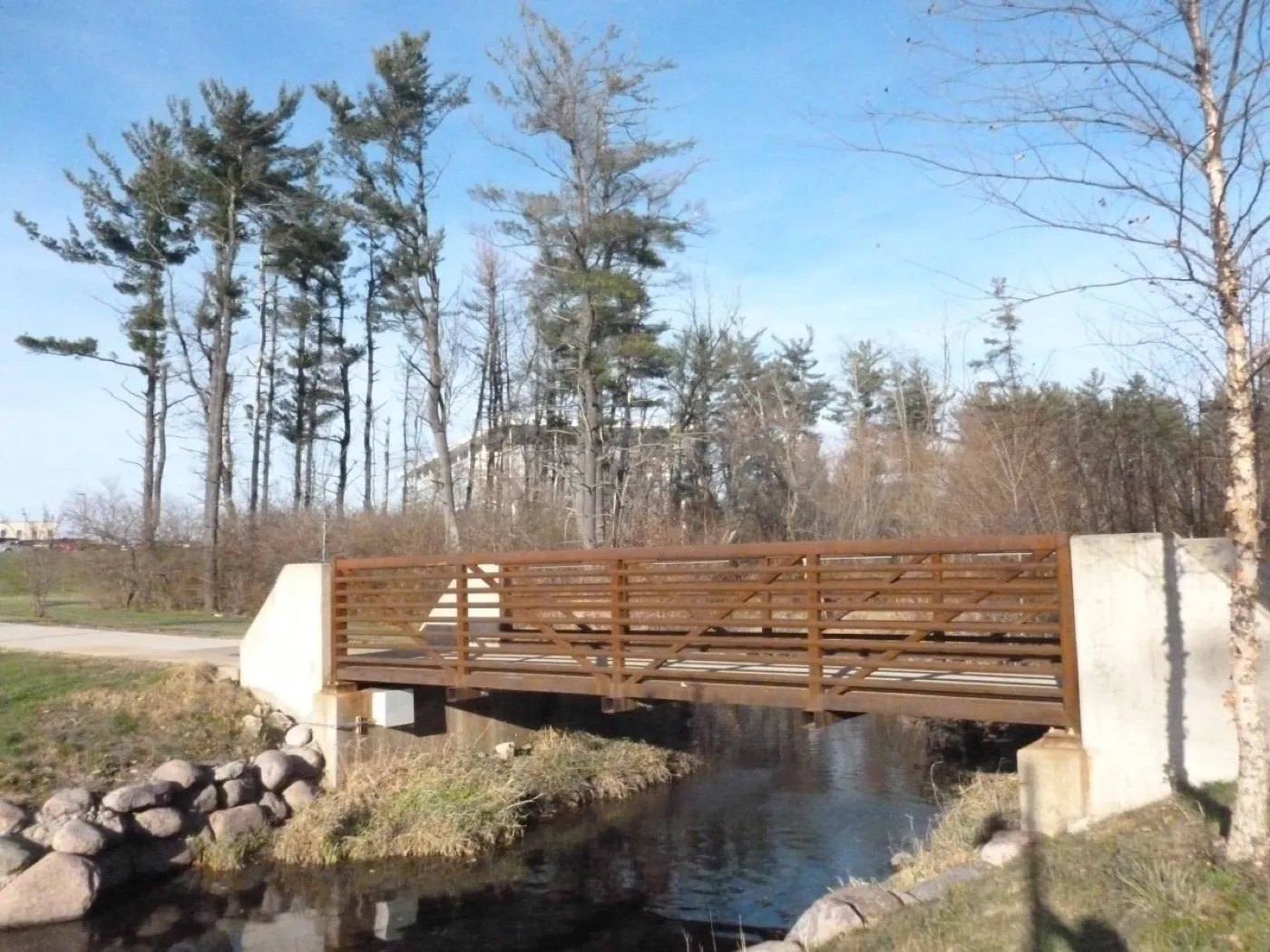
Bridge Inspection Services
Carolina Infrastructure Assessment provides NBIS-certified bridge inspections for vehicular, pedestrian, and golf cart bridges in North Carolina, Virginia, Maryland, and Washington, D.C., delivering photo-documented condition reports within 5 business days.
Standardized defect evaluations applied to all deck, superstructure, and substructure elements.
Hands-on condition assessments for private road crossings, trail footbridges, and golf course spans.
Executive 2-page A–F Report Card with high-resolution photo defect logs delivered in 5 business days.
Federal-Grade Inspection for Off-System Bridges
Most small bridges on private roads, golf courses, residential subdivisions, and municipal park greenways fall outside mandatory state highway inspection schedules. However, property owners and community boards remain fully legally and financially responsible for structural safety.
Our evaluations apply the rigorous National Bridge Inspection Standards (NBIS) and Federal Highway Administration (FHWA) defect coding criteria to every crossing. We identify early-stage section loss, bearing distress, foundation scour, and timber decay before they require costly emergency closures or replacement.
Because Carolina Infrastructure Assessment operates exclusively as an independent inspection firm, we never bid on construction or repair contracts. Our findings are completely objective, protecting your board from inflated contractor scopes.
Independent Condition Documentation
We provide objective evaluations without ties to construction contractors, ensuring your board or municipality receives honest condition ratings and realistic maintenance timelines.
Bridge Components Evaluated
Detailed inspection protocols covering critical structural, hydraulic, and safety elements.
Deck & Riding Surface
- Concrete deck cracking, delamination, and surface spalling
- Timber plank weathering, rot, and loose hardware fasteners
- Asphalt overlay rutting, shoving, and reflective cracking
- Expansion joints, strip seals, and drainage scupper outlets
Superstructure Members
- Structural steel beams, girders, cross-frames, and connection plates
- Prestressed and reinforced concrete stringers and T-beams
- Timber stringers, solid sawn beams, and glulam arches
- Bearing devices, elastomeric pads, and anchor bolts
Substructure & Foundations
- Reinforced concrete, timber, and masonry abutments and wingwalls
- Intermediate pier columns, bents, and pile caps
- Hydraulic scour, stream channel degradation, and footing undermining
- Slope protection, riprap placement, and embankment stability
Safety Features & Approaches
- Vehicular guardrails and pedestrian handrail compliance
- Approach roadway transitions and settlement behind backwalls
- Weight limit and structural advisory signage verification
- Waterway alignment and upstream/downstream drift accumulation
Bridge Types We Regularly Inspect
Crossings and drainage facilities evaluated across private, commercial, and municipal properties.
Private Road & Subdivision Bridges
Single-lane and multi-lane vehicular bridges serving residential communities, townhome developments, and commercial office parks.
Pedestrian & Greenway Bridges
Footbridges along municipal park trails, residential greenway systems, educational campuses, and corporate walking circuits.
Golf Course Cart Bridges
Timber, structural steel, and concrete golf cart crossings spanning water hazards, ravines, and wetland preservation buffers.
Heavy Commercial & Agricultural Spans
Access bridges subjected to recurring delivery trucks, agricultural equipment, emergency service vehicles, and commercial traffic.
Common Structural Defects Identified
Early-stage deterioration patterns identified before structural capacity is compromised.
Steel Section Loss & Corrosion
Flaking corrosion, pack rust between girder flanges, and measurable steel section loss around lower chords and bearing areas.
Concrete Delamination & Spalling
Freeze-thaw concrete fractures, corrosion-induced spalling, and exposed reinforcing steel on bridge decks and pier caps.
Timber Decay & Hardware Failure
Internal fungal rot within timber pile tops, stringer checks, insect damage, and loose or corroded structural connector bolts.
Foundation Scour & Embankment Loss
Erosion of stream bed soils beneath bridge footings, abutment undermining, and embankment slumping after severe weather events.
Who Relies on Our Bridge Assessments
Tailored inspection deliverables designed for both lay board members and municipal engineering staff.
Homeowner Associations (HOAs)
Board members managing private roadway and pedestrian bridges use our executive 2-page Report Card to fulfill fiduciary responsibilities, plan reserve funds, and protect residents.
Golf Courses & Country Clubs
General managers and superintendents schedule annual cart bridge reviews to prevent player safety hazards and plan non-disruptive off-season repairs.
Municipal Parks & Public Works
Town public works directors rely on our NBIS-qualified reports to maintain complete inventory records and satisfy regulatory standards for municipal greenways.
Commercial Property Managers
Facility directors ensure access bridges and parking facility spans remain compliant, safe for commercial delivery vehicles, and fully insured.
Inspection Deliverables
Every evaluation includes comprehensive documentation delivered digitally within 5 business days of the field assessment.
Executive 2-Page A–F Report Card
A high-level condition summary with component letter grades, key defect findings, and clear takeaways designed specifically for board voting and budget reviews.
Comprehensive NBIS Technical Report
Full structural defect documentation following Federal Highway Administration recording and coding guide standards, suitable for engineering archives.
High-Resolution Photographic Log
Every identified defect documented with detailed photographs, component location tags, and clear comparative severity ratings.
Prioritized Maintenance & Action Matrix
Recommended maintenance actions categorized into immediate safety repairs, 1-to-2 year maintenance items, and long-term capital reserve budgeting.
Regional Inspection Coverage
We provide scheduled field evaluations across four Mid-Atlantic jurisdictions. Select your region to view local coverage and scope.
North Carolina
Scheduled field dispatch across the Piedmont Triad, Research Triangle, and Charlotte corridors, evaluating vehicular bridges, pedestrian trail crossings, and roadway drainage culverts.
Virginia
Responsive regional routing across Fairfax, Arlington, Alexandria, and Northern Virginia, providing condition assessments for roadway crossings, pedestrian spans, and drainage culverts.
Washington D.C.
Dedicated urban routing throughout Washington, D.C., delivering independent condition assessments for campus pedestrian bridges, commercial access spans, and enclosed drainage networks.
Maryland
Regular coastal and inland dispatch across Salisbury, Ocean City, Cambridge, and Easton, evaluating access bridges, corrugated drainage culverts, and tidal stormwater discharge outfalls.
Frequently Asked Questions
Direct answers about our bridge inspection protocols. Have a specific structure question? Give us a call.
How often should a private or HOA bridge be inspected?
Federal standards require public highway bridges to undergo inspection every 24 months. For private and HOA bridges, establishing a baseline evaluation followed by regular annual or biennial condition reviews is recommended to track structural changes, maintain insurance compliance, and prevent sudden emergency closures.
What standards do your bridge inspectors follow?
All bridge assessments are conducted under National Bridge Inspection Standards (NBIS) and Federal Highway Administration defect evaluation criteria, led by an NBIS Team Leader qualified in fracture-critical inspection and ultrasonic testing.
Do pedestrian and golf cart bridges require formal inspections?
Yes. Although pedestrian and cart bridges carry lighter vehicular weights, they are susceptible to timber rot, bearing settlement, safety railing failures, and foundation scour from stream currents. Regular inspections protect property owners from liability and extend structure lifespans.
Can you inspect NCDOT bridges in North Carolina?
No. In North Carolina, we inspect bridges owned by municipalities, HOAs, golf courses, parks, and private commercial properties. We do not inspect state-owned structures on the NCDOT highway system.
Do you perform bridge repairs if problems are found?
No. Carolina Infrastructure Assessment operates exclusively as an independent inspection firm. We do not perform structural repair work or bid on construction contracts, ensuring our condition evaluations remain completely objective.
Schedule a Bridge Inspection
- Scheduled in 1–2 weeks.Most inspections are on the calendar within two weeks of your first call.
- Reported in 5 days.Your full report and Report Card arrive digitally within 5 business days.
- 20% off your first inspection.Ask about our Founder's Program for first-time clients.
Speak directly with an NBIS-certified program manager about your crossings or drainage structures. 15-minute scoping calls and standard 5-day turnarounds.
- Phone
- (336) 653-1866
- Location
- Greensboro, NC